
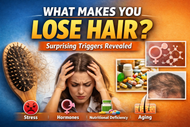
What Makes You Lose Hair? Surprising Triggers Revealed
Posted by Xandrox on 21st Feb 2026
Hair loss can sometimes seem sudden, frustrating, and even confusing. One day your hair is thick and healthy-looking, and the next day you find yourself with more hair than usual in the shower drain or on your pillow. While genetics are often the culprits, the fact is that many unexpected causes can lead to hair thinning and shedding. The first step to protecting your hair, or even reversing it, is to understand why this happens.
Let’s take a closer look at what really causes you to lose hair and what you can do about it.
1. Stress (Yes, It Really Does Matter)
Stress can cause a high level of hair follicles to enter a resting state, a condition called telogen effluvium. This results in noticeable hair loss a few months following a stressful incident. Stress, illness, surgery, or even extreme weight loss can be contributing factors.
The bright side: Stress-induced hair loss will resolve once the body returns to normal.
2. Hormonal Changes
Hormones are a significant factor in the hair growth process. Changes from pregnancy, menopause, thyroid disorders, or conditions such as PCOS can affect the hair growth cycle. In both men and women, DHT sensitivity (a testosterone derivative) can cause hair follicles to shrink, resulting in pattern hair loss.
3. Nutritional Deficiencies
Hair requires the right nutrients for healthy growth. Iron, vitamin D, zinc, protein, or B vitamin deficiencies can cause hair to weaken and slow down its growth. Crash diets and eating restrictions are common yet often overlooked causes.
A balanced diet is essential for maintaining good health and healthy hair.
4. Overstyling and Heat Damage
The constant use of flat irons, curling wands, tight ponytails, braids, and chemical processing can stress the hair shaft and roots. Over time, this causes breakage and traction alopecia (hair loss due to constant pulling).
Taking regular breaks from heat styling and tight hairstyles can make a world of difference.
5. Medical Conditions and Medications
Some medical conditions, such as autoimmune diseases and scalp infections, can lead to hair thinning. Certain medications, including those for high blood pressure, depression, and chemotherapy, can also lead to shedding.
If you believe that your hair loss is due to medication, it is best to consult a doctor before making any changes.
6. Aging
As we age, our hair naturally thins and grows at a slower rate. The hair follicles shrink, and some even stop producing hair altogether. While this is a natural process, it can be controlled with proper hair care and treatment.
However, when hair loss becomes a persistent problem, specific treatment may be required. Xandrox is designed to promote hair growth and reduce further loss.
The active components in Xandrox function in the following ways:
- Stimulating the hair follicles
- Extending the growth phase of the hair cycle
- Increasing blood flow to the scalp
- Strengthening miniaturised hair follicles
With regular use, most people experience a decrease in shedding and an increase in hair density. Although results may differ from one person to another, early treatment is often more effective.
Hair loss is not always a matter of genetics. Stress, hormones, diet, lifestyle choices, and health issues can all be contributing factors. The good news is that many of these causes can be managed once they are known.
It is possible to take back control by understanding what may be causing your hair loss and making changes to address it. If you are experiencing hair loss, the sooner you can address the cause, the better.
Your hair has a story to tell about your health. Are you listening?