
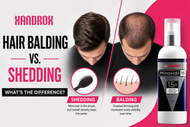
Hair Balding vs. Shedding: What's the Difference?
Posted by Xandrox on 22nd Aug 2026
Finding extra strands of hair in your hairbrush, shower drain, or on your pillow is disconcerting. However, the appearance of fallen hair does not necessarily mean that you are balding.
There is a difference between hair loss and hair balding. Knowing what each means can help you determine which is the problem and whether it warrants a treatment.
What Is Normal Hair Loss?
Everyone experiences hair loss daily. Your hair is meant to go through an ongoing cycle of growth, transition, and rest before being shed.
In most cases, normal hair loss occurs within the hair growth cycle. You could have fallen hairs in your hairbrush, but your total hair density will remain consistent.
There could also be temporary episodes of hair loss caused by external issues such as stress, illness, sudden diet changes, or hormonal changes.
What is Balding?
Balding is unique in that it involves a gradual decrease in the density of hair.
The most prevalent cause is androgenetic alopecia, which is referred to as male or female-pattern hair loss. In hair loss from this condition, hair follicles that are genetically predisposed become smaller and start producing thin and short hairs.
Rather than just shedding individual hairs and growing them back the same size, you may notice:
- A receding hairline
- An increasingly wide part
- More skin appearing through your hair
- Thinning hair on top of your head
- Smaller-sized ponytail
- Thin hair that appears increasingly so over time
Pattern and progression often matter more than the amount of hair visible in the shower.
Distinguishing between Shedding and Hair Loss: What Are the Differences?
One way to understand the distinction is as follows:
Hair shedding is concerned with the amount of hair that is lost, while hair loss is related to whether there is a reduction in your hair density.
There is the possibility of experiencing shedding without going into hair loss due to pattern. On the other hand, it is possible for someone who is going through pattern hair loss to experience hair loss that does not seem like much.
You might find it helpful to take pictures of your hairline, hair part, and crown after some time.
When Should You Be Concerned?
You might need to seek professional opinion when hair loss is:
- Sudden or excessive
- Localised to certain areas
- With associated pain, itching or scaling of the scalp
- Causing thinning of hair
- Along with other unusual symptoms
There could be various reasons for hair loss, and understanding the cause behind hair loss is crucial before considering any treatment.
What Role Does Xandrox Play?
In cases where hair loss has something to do with pattern hair loss, Xandrox provides topical hair-growth formulas based on minoxidil that may be used to facilitate hair regrowth. Currently, there is a formula with 15% minoxidil and azelaic acid.
Minoxidil is a known remedy for pattern hair loss that promotes support for hair follicles and hair growth. The current formula of Xandrox contains minoxidil and azelaic acid.
When it comes to topical hair-growth products, consistency is key, as well as the fact that it takes some time to see the results. According to the information from Xandrox, the results will be visible only after a couple of months of consistent use.
The Bottom Line
Hair on your brush doesn’t necessarily indicate that you’re balding. Hair loss can occur normally through the hair cycle, whereas balding is generally associated with a gradual reduction in hair density and follicle size.
If you experience a constantly receding hairline, an expanding part, a thinning crown, or increasingly fine hair, it may be time to consider pattern hair loss. One topical remedy that may be helpful for some patients is Xandrox.